A loading dock is a transition zone: drivers move from a dark yard toward a bright building; forklifts cross pedestrian paths; trailers turn the doorway into a short, shaded tunnel. Treating it as one broad floodlit area misses the places where people need to see a grade change, dockboard, wheel chock, label, or face. A useful lighting package separates the truck approach, exterior apron, dock face, threshold, trailer interior, and indoor staging area—then checks each on a photometric plan.
This is an application guide, not a substitute for the applicable building, electrical, energy, or life-safety code. Confirm the project’s jurisdiction, adopted energy code, and authority having jurisdiction (AHJ) before issuing a schedule.
Start with the traffic plan
Draw the lighting zones on the operational plan before choosing fixture outputs. Mark trailer positions, travel lanes, pedestrian crossings, doors, dock levelers, stairs, bollards, guardrails, and the line where daylight ends inside the building. The plan should also identify where a driver approaches the building and where a forklift exits a trailer.
That focus is practical safety work, not cosmetic brightness. OSHA identifies dock edges, wet or icy conditions, and pedestrian movement as loading-dock hazards, and specifically recommends improving edge visibility. Its forklift guidance also calls out the visual adjustment when a driver goes from bright daylight into a dark building. OSHA loading-dock guidance OSHA forklift travel guidance
For each zone, document the task plane and the people who use it:
- Truck approach and exterior apron: vehicle path, pedestrians, dock face, and door numbers.
- Dock edge and leveler: the change in elevation, restraint equipment, dockboard, and any yellow warning stripe.
- Door threshold and trailer interior: the transition from exterior daylight or darkness into the trailer.
- Indoor staging and cross-aisles: pallet labels, forklift routes, packing work, and paths to exits.
The deliverable should be a calculation report with the relevant horizontal and vertical calculation planes—not a single average value applied to the whole dock. Ask the lighting designer to show point values at the edge, leveler, trailer entrance, and pedestrian crossing, then review the minimums and uniformity as well as the average. Where workers must inspect labels, seals, or damage, the task itself may require more light than the surrounding circulation zone.
Layer exterior light instead of over-lighting the wall
The exterior package commonly combines a targeted area or flood luminaire for the apron with building-mounted luminaires at doors and pedestrian routes. The best combination depends on pole locations, canopy geometry, truck approach direction, neighboring property, and the luminaire’s published photometry.
Specify the optic and aiming intent, not just watts or nominal lumens. A fixture that throws light well beyond the dock can create glare in mirrors and windshields, light trespass at the property line, and bright patches that make a darker dock edge harder to read. The joint DarkSky/IES outdoor-lighting principles recommend useful light only where needed, shielding and aiming that direct the beam downward, the lowest necessary level, and controls that dim or turn lighting off when it is not needed. Five Principles for Responsible Outdoor Lighting
For the submittal review, request the IES files for the exact output and optic, then check these questions:
- Does the luminaire deliver light to the apron and dock face without aiming directly into the truck approach?
- Is the distribution shielded or house-side controlled where the property line, residences, or adjacent roads make spill a concern?
- Are poles, canopies, doors, signs, and trees included in the calculation model as they will be installed?
- Can a maintenance crew reach the driver, optic, and controls without disrupting dock operations?
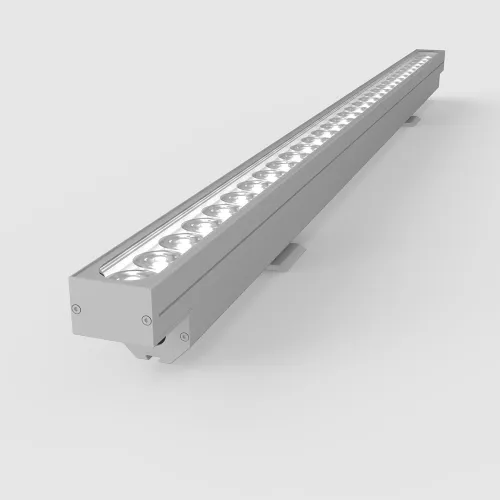
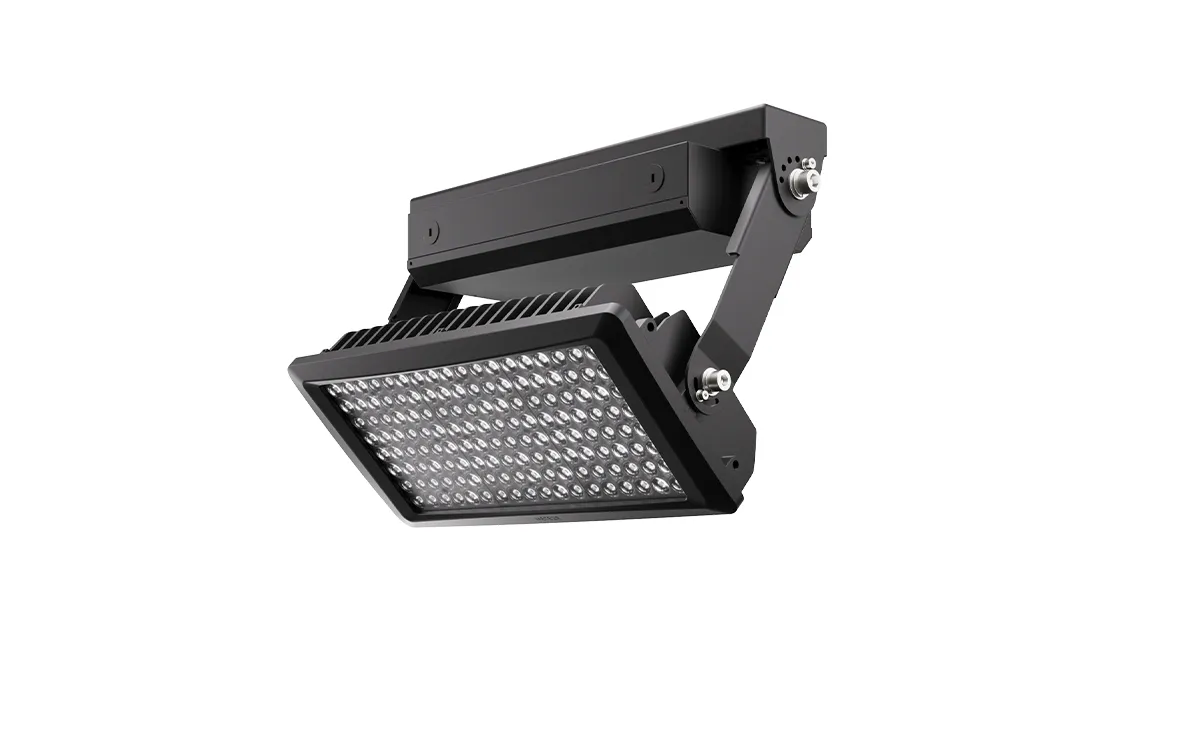
Use the outdoor flood light category for targeted apron or yard luminaires and the wall pack category for building-mounted coverage. Compare the actual photometric distribution, mounting height, and environmental rating rather than assuming products in the same housing shape perform alike.
Make the threshold a separate lighting problem
The open door is often the hardest visual condition on the site. During the day, the yard may be bright while the trailer and the indoor dock are comparatively dark; after dark, exterior fixtures can make the doorway appear like a source of glare. Do not expect apron lighting alone to solve that transition.
Coordinate permanent lighting with the overhead door position and the trailer workflow. The lighting plan should reveal the dock edge and leveler when a trailer is absent, and it should not leave the trailer threshold in a deep shadow when a trailer is present. Where trailer loading is part of the operation, coordinate with the logistics and safety teams on the approved task lighting and its mounting, cord management, and inspection procedure. Portable equipment is a separate electrical-safety and operational decision, not a substitute for a designed permanent system.
Include emergency and egress conditions in the field walk. OSHA’s warehousing guidance calls for safeguards such as exit lighting to be kept in proper working order. The emergency designer and AHJ—not the exterior fixture schedule—determine the required egress arrangement. OSHA warehousing hazards and solutions
Select fixtures for the environment they will actually see
Loading docks are exposed to vibration, vehicle exhaust, wind-driven rain, dust, temperature swings, washdown practices, and forklift impact. The right luminaire is therefore defined by its published listing, installation instructions, and tested photometry—not by a generic “industrial” description.
Check the project-specific requirements for:
- Wet or damp location listing at the exterior face, canopy, and open dock.
- Impact protection, guards, or mounting locations where forklifts and trailers can strike equipment.
- Corrosion resistance where de-icing salts, coastal air, chemicals, or washdown are present.
- Surge protection appropriate to the building electrical design and exposure.
- Ambient-temperature range and driver location, especially where a dock is refrigerated or unusually hot.
- Service access for lenses, drivers, sensors, and emergency equipment.
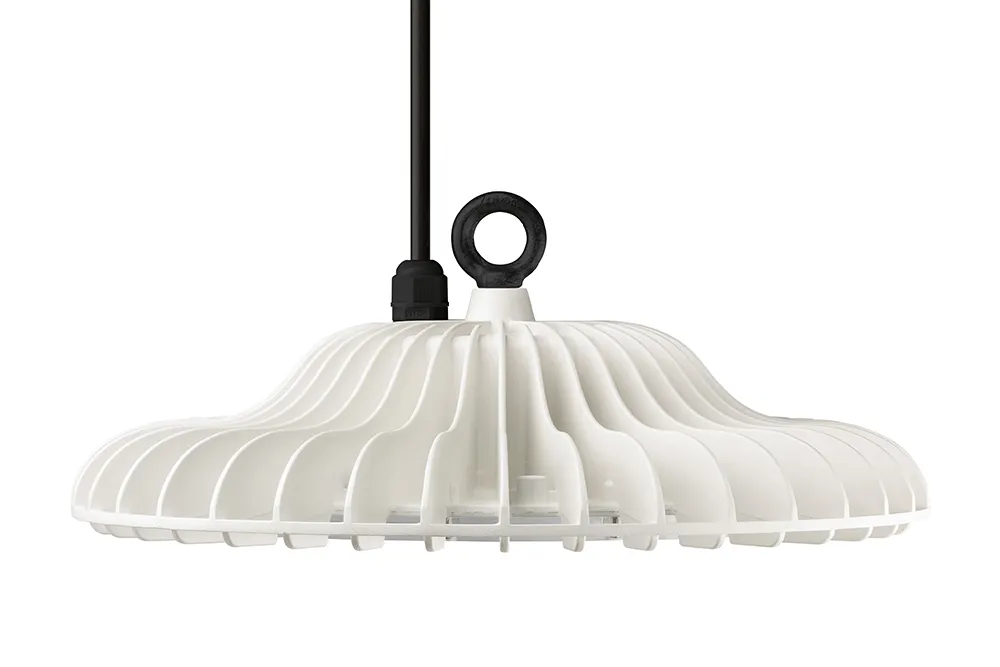
Inside the staging zone, high-bay luminaires may be the right starting point where the ceiling is high and the layout must light pallet storage and forklift paths. Start the shortlist in the high-bay category, but use the manufacturer’s current cut sheet to confirm mounting, temperature, control, and distribution options for the selected model.
Commission controls around real operating hours
Exterior controls should preserve safe operation without burning at full output all night. A photocell can switch or dim exterior lighting in response to dawn and dusk, while exterior-rated occupancy sensors can raise or lower lighting according to detected activity. DOE’s exterior-controls guidance describes programmable schedules, light sensors, and occupancy sensors as complementary control inputs; it also notes that PIR is typical in exterior and parking applications. DOE Exterior Lighting Control Guidance
Write the control intent in plain language on the drawings. For example: normal dock operation, after-hours security, curfew, delivery arrival, manual override, and emergency mode should be separately understood. Avoid a sensor setting that lets the apron fall dark while a truck is still being positioned, and verify that a photocell is not fooled by canopy spill or a nearby luminaire.
Commission at night with the dock team, not only from a laptop. Walk the pedestrian route; drive the truck approach where possible; open and close a trailer position; and confirm the transition into the building. Record final aiming and control settings, retain the calculation report and IES files, and train the facility team on what a failed driver or sensor looks like.
A concise submittal checklist
Before release, make sure the submittal answers these questions:
- Which exact IES files and output packages support each zone’s calculation?
- Where are the critical edge, threshold, crossing, and task-plane calculation points?
- What prevents glare for truck drivers, pedestrians, and adjacent properties?
- Which environmental, impact, and service conditions does each luminaire’s documentation cover?
- What do the photocell, schedule, occupancy response, override, and emergency modes do?
- Who will aim, test, document, and maintain the installation after handover?
The right loading-dock design makes the work area legible without turning the building perimeter into a glare source. Build the schedule from a zone-based photometric plan, use only published fixture performance, and verify the result with the people who load the trailers.