Office lighting is governed by well-established standards (EN 12464-1 in Europe, IES RP-1 in North America), which makes it one of the few categories where a spec can be verified objectively — and where cutting corners shows up immediately in employee complaints.
The two numbers that matter: 500 lux and UGR 19
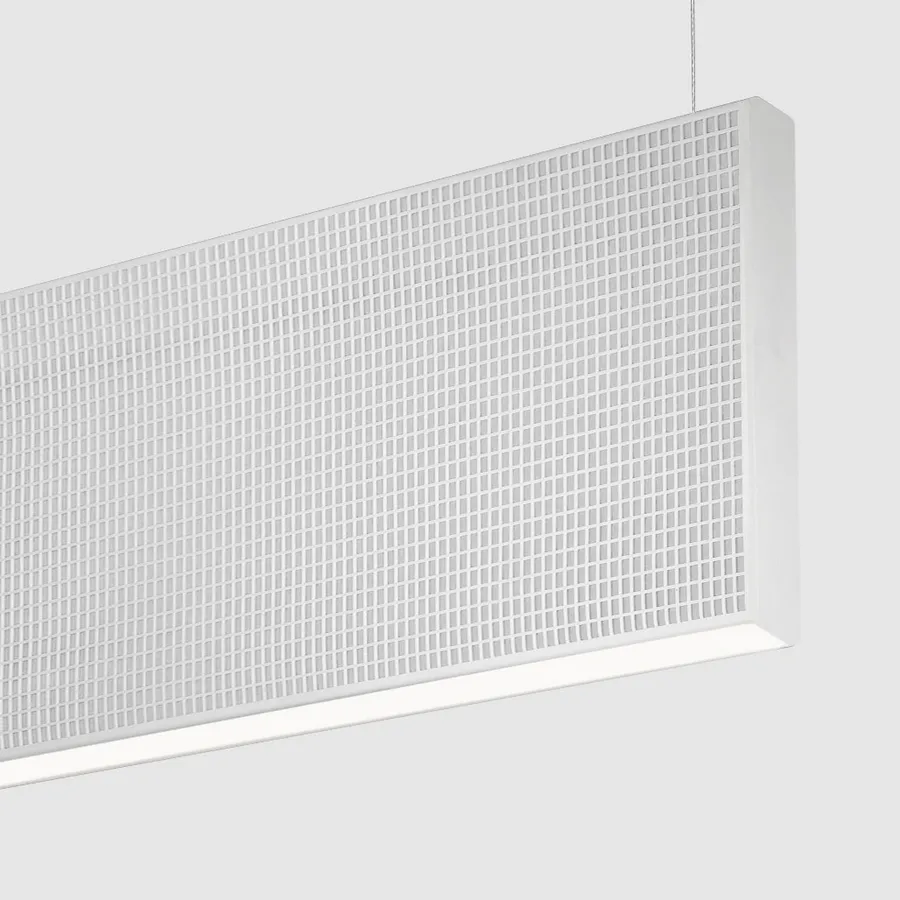
Workstations need 500 lux maintained on the task plane with UGR ≤ 19 glare performance. Both are fixture-plus-layout properties: a compliant fixture in the wrong grid still fails. Microprismatic optics are the usual way panels and linears hit UGR 19; opal diffusers rarely do at office spacings.
Panels or linear?
- Panels win on cost and simplicity in modular grid ceilings — the default for standard fit-outs.
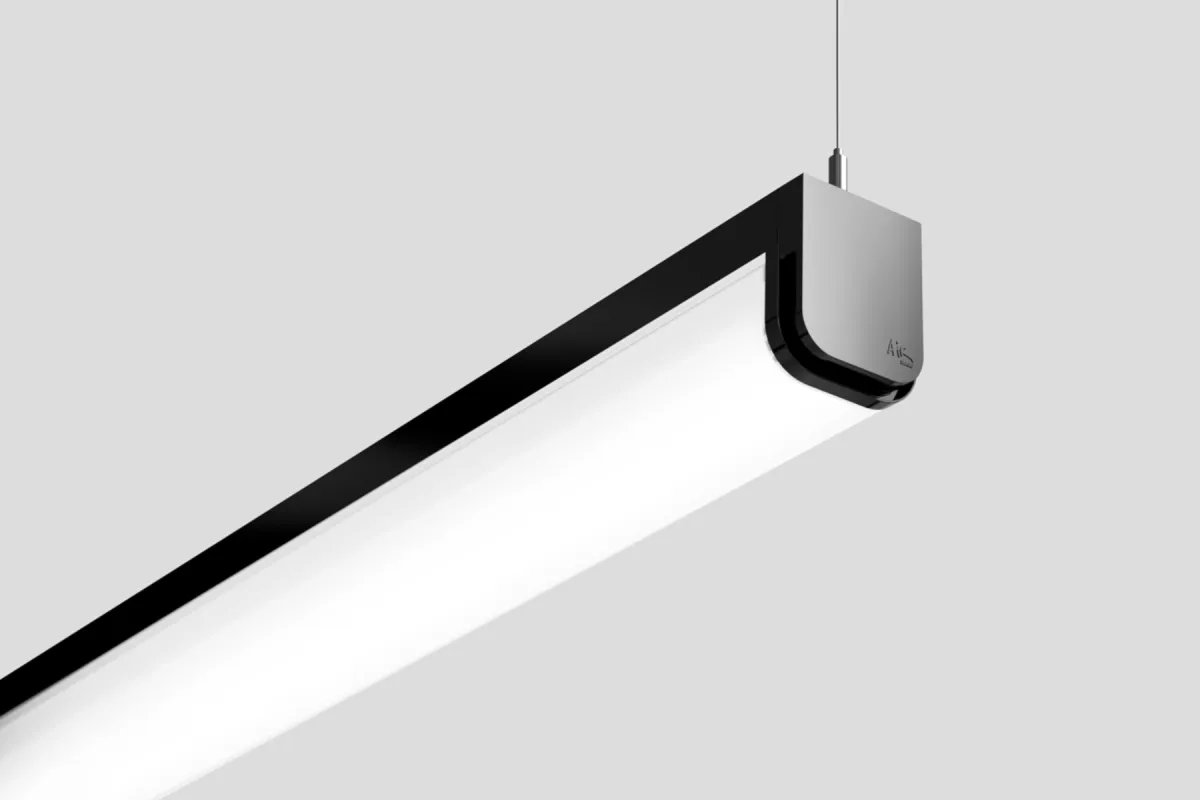
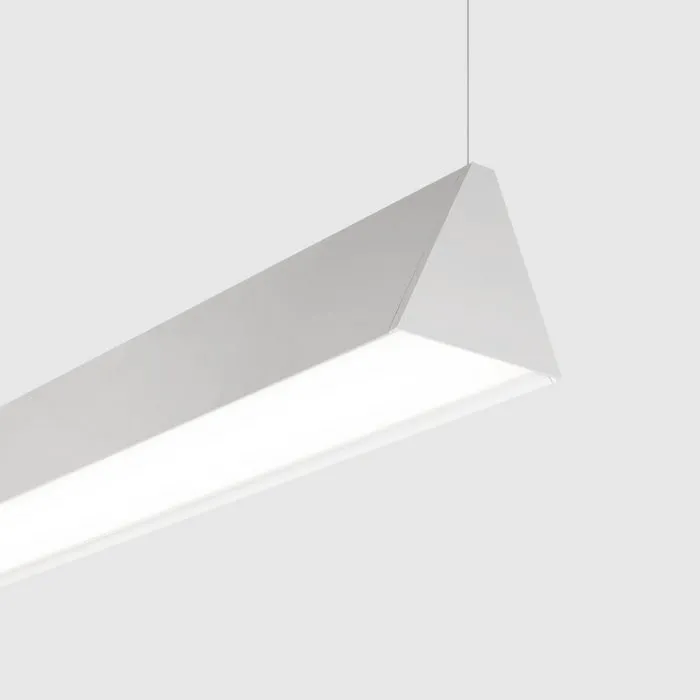
- Linear systems win on design flexibility and daylight-oriented layouts: continuous runs parallel to façades dim in rows as daylight enters. They also survive ceiling redesigns better, since runs are re-configurable.
A common hybrid: linear in open-plan and collaboration areas, panels in support spaces, and accent downlights at reception.
Daylight is the free luminaire
Offices with glazing should always be zoned for daylight dimming — perimeter rows dim while core rows hold level. Combined with occupancy sensing in meeting rooms and quiet zones, controls routinely halve office lighting energy against a switched baseline.
Datasheet checklist
- UGR table (not just a single number) valid for your room geometry
- Flicker < 5% for screen-heavy work
- CCT consistency ≤ 3-step MacAdam across an order
- DALI-2 if the building has, or will get, a lighting management system